
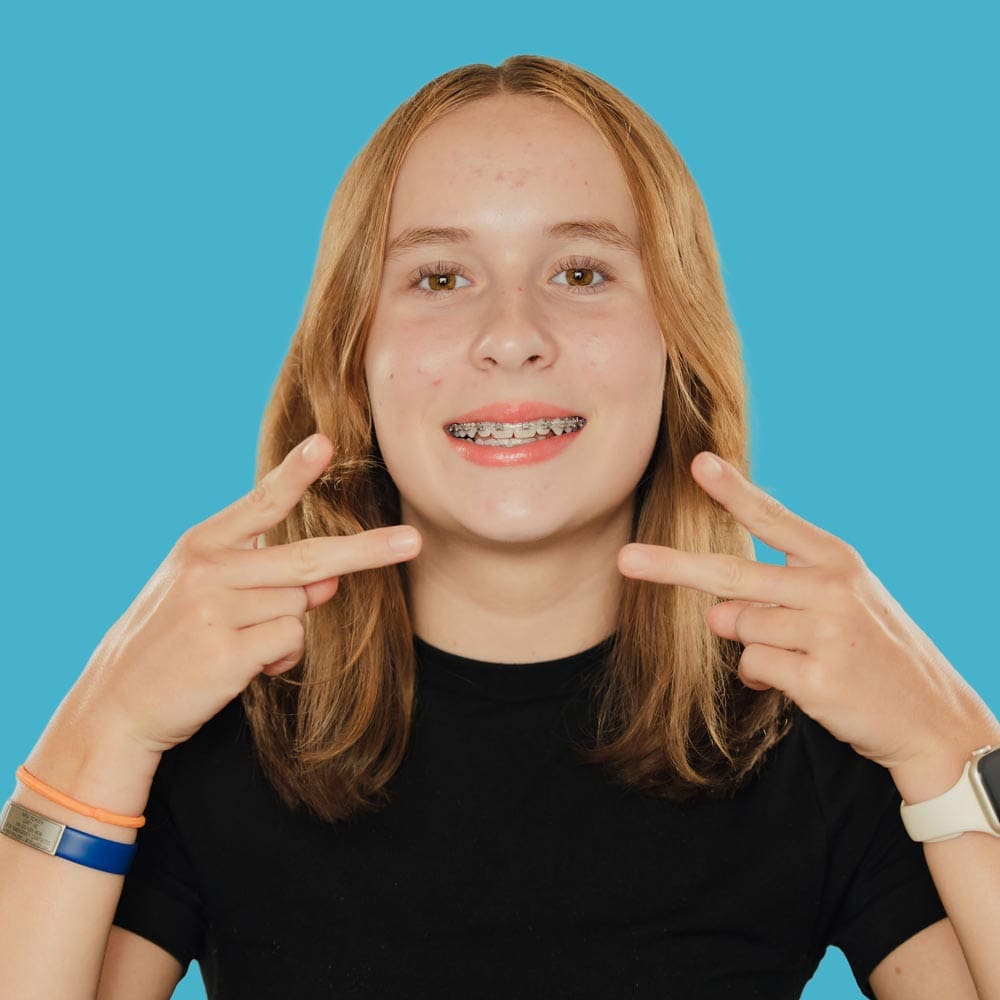
The first question most kids ask Dr. Patel before braces go on is some version of “is this going to hurt?” It’s the same question their parents are quietly wondering too.
Here’s the plain answer: yes, braces cause some discomfort. But “discomfort” and “pain” aren’t the same thing, and most patients are genuinely surprised by how manageable it is. The fear of braces usually turns out to be worse than the braces themselves.
What helps is knowing what to expect before it happens. Vague reassurances like “it won’t be that bad” don’t actually help anyone. A clear picture of what’s coming, day by day, appointment by appointment, does.
This article gives you that picture, straight from an orthodontist who has walked hundreds of patients through exactly this conversation.
Do Braces Hurt When You First Get Them?
Getting braces put on does not hurt during the appointment itself. The bonding process, attaching brackets to teeth with dental adhesive and threading the wire, involves no injections and no drilling. Most patients sit comfortably through it.
The soreness comes after. Typically 2 to 4 hours following placement, as the wire begins applying pressure and the teeth start to respond, patients notice a dull aching feeling. It’s not sharp. It’s more like the feeling of pressing on a bruise, present, but not unbearable.
The AAO notes that soreness after placement is a normal and expected part of orthodontic treatment. It’s a sign the teeth are responding to the forces applied. Research involving a systematic review of 37 randomized controlled trials confirms that braces discomfort peaks around the first 24 hours after placement (with average pain scores around 42 out of 100 on a clinical scale) and then decreases steadily from there.
That first evening tends to be the least comfortable part of the entire treatment experience.
What it feels like: Pressure on the teeth, sensitivity when biting down, and tenderness in the gums around the new brackets. The cheeks and lips may also feel irritated in the first day or two as they adjust to the hardware.
What it doesn’t feel like: Sharp pain. Throbbing. Anything that interferes with sleep for the majority of patients.
The First Week With Braces: What Is Normal?
Day one after placement is the worst of it for most patients. From there, it gets better, not all at once, but steadily.
Here’s the honest arc:
Day 1: This is typically when soreness peaks. The teeth are responding to the new pressure, biting down on anything firm is uncomfortable, and the inside of the cheeks is getting acquainted with the brackets. Clinical research shows that about 88% of patients report pain in the first 24 hours after placement, so if day one is rough, that’s not unusual.
Days 2 to 3: Still sore, but improving. The acute intensity has started to soften. Most patients find that cold water and soft foods help considerably during this window.
Days 4 to 5: Noticeable improvement for the majority of patients. Most kids are moving toward a near-normal diet by the end of day 5.
Days 6 to 7: Research shows that pain drops to roughly 50% of patients by day 3 and continues falling. By day 7, most patients report minimal to no soreness. The same data shows average pain approaching baseline by the end of the first two weeks.
In Dr. Patel’s experience, the patients who struggle most in the first week are the ones who were caught off guard, not by the intensity, but by the timing. Knowing that day one is the peak, and that it resolves over the following days, removes most of the anxiety.
One more thing worth knowing: bracket irritation on the inside of the cheeks is its own category of discomfort, separate from tooth soreness. It’s real and it’s annoying, but braces wax solves it almost completely. The soft tissue inside your mouth typically adapts within about 1 to 2 weeks, most patients feel notably more comfortable by week two, and largely used to braces by weeks 2 to 3. Wax gets you through that adjustment window comfortably.
When Do Braces Hurt the Most?
Days two and three after they go on, and the day after each adjustment. The first day is mostly strange rather than sore; the pressure peaks around 48 hours and fades by day five or six. Adjustment soreness is milder and shorter, usually a day. If the pain is sharp and in one spot rather than a dull ache everywhere, that is a bracket or wire poking, and the office can fix it the same day.
Do Adjustment Appointments Hurt More Than Getting Braces On?
This is one of the most common worries going into the second appointment. The expectation is that each tightening will feel like the first week all over again.
It doesn’t.
Adjustment appointments cause milder, shorter-lived soreness than the initial placement, not more. The research is clear on this: at the first wire-change adjustment (typically around the one-month mark), average day-one pain runs significantly lower than after initial bonding, around 25 out of 100 on the clinical scale versus the 42 recorded after placement. By day three of that first adjustment, it drops to roughly 15.
There are a few reasons for this. The biggest initial tooth movement has already happened. The teeth have shifted considerably in the first weeks of treatment, so each subsequent adjustment is working with less resistance. And the soft tissue inside the mouth has adapted, the cheeks that were raw in week one aren’t a factor anymore.
The post-adjustment soreness also resolves faster. Where the first week may stretch 5 to 7 days, most patients find adjustment discomfort peaks within the first 24 hours and resolves within 48 to 72 hours.
What most patients don’t expect: by the third or fourth adjustment, many stop noticing significant soreness at all. Dr. Patel hears this regularly, patients come in for a checkup and mention, almost as an afterthought, that they barely felt the last one. That’s not unusual. It’s actually the norm in the later stages of treatment.
The adjustment appointment itself takes roughly 15 to 20 minutes and is not uncomfortable during the visit. The soreness, if any, comes afterward.
What Actually Helps When Braces Are Sore
Generic advice says “eat soft foods and take ibuprofen.” That’s true but incomplete. Here’s what actually makes a difference:
1. Time ibuprofen before soreness peaks, not after
Ibuprofen (Advil, Motrin) is effective for orthodontic soreness because it addresses the inflammation driving the discomfort. A randomized clinical trial comparing ibuprofen and acetaminophen for orthodontic pain found that a protocol of ibuprofen taken about one hour before an appointment, with a second dose roughly six hours later, outperformed acetaminophen on the same schedule. The takeaway: don’t wait until you’re already uncomfortable. If you know an adjustment is today, consider dosing before you go in. Always follow dosing guidelines for your child’s age and weight, and check with your doctor if there are any contraindications.
Note: Both ibuprofen and acetaminophen are effective options. Some orthodontists prefer acetaminophen to avoid repeated NSAID use over a long treatment period. It’s worth asking Dr. Patel what he recommends for your child’s specific situation.
2. Cold helps more than heat
Cold water, cold foods, and ice packs applied to the outside of the jaw reduce inflammation and numb soreness. Avoid very hot foods in the first 24 to 48 hours, heat can intensify sensitivity.
3. Soft foods are a strategy, not a punishment
The first week is not the time to test the braces with a bagel. Soreness is considerably worse when you’re trying to bite through something firm. Scrambled eggs, yogurt, mashed potatoes, pasta, smoothies, and bananas are staples for a reason.
4. Braces wax is underused
Most patients get a small case of dental wax at their placement appointment and forget about it. Use it. Any bracket or wire rubbing against the inside of the cheek stops irritating the moment you press a small piece of wax over it. The soft tissue will toughen over the first couple of weeks, but wax gets you through that window without unnecessary irritation.
5. Warm salt water rinses
Not glamorous, but genuinely effective. A salt water rinse reduces gum irritation around the brackets and soothes soreness in the soft tissue. Once or twice a day in the first week makes a noticeable difference.
Placement Day vs. Adjustment Appointments, At a Glance
| Factor | Placement Day | Adjustment Appointment |
|---|---|---|
| Discomfort during the visit | None | None to minimal |
| When soreness begins | 2 to 4 hours after | 2 to 6 hours after |
| Peak soreness | Day 1 (avg ~42/100 VAS) | Day 1 (~25/100 VAS, significantly lower) |
| How long it lasts | 5 to 7 days typically | 24 to 72 hours typically |
| What it feels like | Dull aching, pressure, cheek irritation | Pressure, mild tenderness |
| What helps most | OTC pain relief (pre-dosed), soft foods, cold, wax | OTC pain relief, cold foods |
| Does it get easier with each visit? | N/A | Yes, notably so by adjustment 3 to 4 |
When Should You Call the Office?
Soreness is normal. These things are not:
A wire that’s poking the back of your cheek. This happens occasionally as the wire shifts. It won’t resolve on its own, the fix is quick (a small trim or a piece of wax over the end) and the relief is immediate. Call the office so we can sort it properly. In the meantime, wax over the wire tip.
A bracket that has come loose or fallen off. You’ll usually notice because the bracket moves freely or feels different when you touch it with your tongue. This doesn’t require an emergency visit in most cases, but it does need to be addressed within a day or two so treatment isn’t delayed.
Swelling in the gums or jaw that isn’t improving, or spreading. Some gum puffiness around brackets is normal in the first week. Swelling that’s spreading, accompanied by fever, or worsening after day 4 warrants a call. Difficulty swallowing or rapidly increasing facial swelling are “call now” signs.
Pain that is sharp, localized to one tooth, or worsening after day 4. General soreness resolves on a predictable arc. Pain that’s getting worse instead of better, or that feels different from the usual dull pressure, particularly pain that interferes with sleep or eating despite OTC pain relief, is worth checking out.
At Tooth By Tooth, we’d rather get a call that turns out to be nothing than have a patient sit with something that needed attention. There is no such thing as a dumb question during the first month of treatment.
Does the Discomfort Get Better Over Time?
Yes. Reliably and noticeably.
The research backs up what patients report in the chair: pain approaches baseline by the end of the second week after placement, and as treatment progresses into months 2 to 3, post-adjustment soreness becomes smaller and resolves more quickly. There is no progressive worsening over the course of treatment, each new archwire or activation can cause short-term soreness, but those spikes stay modest compared to the first week.
Most patients by the midpoint of treatment, somewhere around month 6 in a typical 18-month case, barely register discomfort after appointments at all.
The first week will be the hardest week. The first adjustment will be worse than the ones that follow. It genuinely gets easier from there.
What also gets easier: eating, speaking clearly, and forgetting the braces are there. The first week, braces occupy a lot of mental real estate. By month two, most kids stop thinking about them between appointments.
That’s the arc, uncomfortable start, quick adjustment, largely unremarkable for the majority of treatment. And the result at the end makes the first week look like a very reasonable trade.
If you’re wondering what the full treatment timeline looks like, or what happens at each stage from placement to the day braces come off, our guide to how long braces take walks through it in the same plain-language way. For more on braces treatment in Cary, including what Dr. Patel’s approach looks like from day one, that’s a good next read too.
Frequently Asked Questions
How long do braces hurt after tightening?
Soreness after an adjustment appointment typically peaks within the first 24 hours and resolves within 48 to 72 hours for most patients. Clinical data show that first-adjustment pain is significantly lower than after initial placement, and by the third or fourth adjustment, many patients notice very little soreness at all.
Do braces hurt more for some people than others?
Yes, individual pain tolerance varies, and patients with more significant crowding or bite issues requiring greater initial movement may notice more pronounced soreness early in treatment. That said, clinical research consistently shows that about 88% of patients report pain in the first 24 hours, with the vast majority describing it as manageable, not debilitating.
Can I take ibuprofen for braces pain?
Ibuprofen is well-supported for orthodontic soreness. A randomized clinical trial found that taking ibuprofen about one hour before a procedure (such as an adjustment), with a second dose roughly six hours later, outperformed acetaminophen on the same schedule. Both medications are effective options, check with Dr. Patel on what’s right for your child, and always follow age- and weight-appropriate dosing guidelines.
Braces do cause discomfort, mostly in that first week, and briefly after each adjustment. What they don’t cause, for the vast majority of patients, is the kind of ongoing pain most people fear going in.
The first week is the hardest part. It gets easier quickly. And a healthy bite and a smile they’re proud of is worth a few uncomfortable days.
Have questions about your child’s bite? Dr. Patel is happy to take a look, no commitment, no runaround. Schedule a free consultation and get a straight answer from the doctor who’ll actually do the work.
About the Author
Dr. Nishant Patel, DDS, MS, Orthodontist & Founder, Tooth By Tooth Orthodontics
Dr. Patel earned his DDS from the University of Illinois at Chicago College of Dentistry, graduating at the top of his class, and his MS with orthodontic certificate from the University of Minnesota. His research was published in the American Journal of Orthodontics and Dentofacial Orthopedics. After eight years practicing in the Chicago suburbs, he founded Tooth By Tooth Orthodontics in Cary, NC, where he sees every patient personally, every visit.